How to Reduce Inflammation Naturally: The Complete Guide
Discover science-backed ways to reduce inflammation naturally — from diet and lifestyle changes to targeted botanicals. Plus, what actually works at the root level.
Ingredients in this letter

TL;DR
- Chronic inflammation is driven by at least 6 distinct biochemical pathways - addressing only one rarely brings lasting comfort.
- Diet is foundational: a Mediterranean-style eating pattern has been shown to reduce CRP (a key inflammation marker) by up to 30% in clinical studies.
- Key botanicals including Boswellia serrata and Curcumin have peer-reviewed evidence behind them - but standardization and bioavailability determine whether they actually work.
- Lifestyle factors - sleep, stress, movement - are not optional add-ons. They are first-order drivers of the inflammatory response.
- Bottom line: A multi-pathway approach combining diet, lifestyle, and targeted supplementation is more effective than any single fix. Start with the fundamentals, then layer in support where needed.
Why Inflammation Happens - And Why "Natural" Gets Complicated
If you've searched for how to reduce inflammation naturally, you've probably found a long list of foods, supplements, and lifestyle tips. Some of them work. Many of them are oversimplified.
Here is the honest version: inflammation is not a single problem. It is your immune system doing its job - until it doesn't stop. Acute inflammation is protective. Chronic, low-grade inflammation is the issue, and it operates through multiple overlapping biochemical pathways simultaneously. That's why a single spice or a single habit change rarely gets the job done on its own.
This guide covers what the research actually shows: the root mechanisms driving chronic inflammation, the dietary and lifestyle factors that influence them most, and the supplementation strategies with the strongest evidence behind them.
Understanding the Root Causes of Chronic Inflammation
Before you can reduce inflammation naturally and effectively, it helps to understand what's driving it in the first place.
The Main Inflammatory Pathways
Your body's inflammatory response is coordinated by several enzyme systems and signaling molecules. The two most studied are:
- COX-2 (cyclooxygenase-2): Produces prostaglandins, which signal inflammation and discomfort throughout the body. Triggered by injury, stress, and poor diet.
- 5-LOX (5-lipoxygenase): Produces leukotrienes, another class of inflammatory mediators. Less widely known but equally important - especially in joint and respiratory tissue.
Beyond these, inflammatory cytokines like TNF-alpha, IL-6, and NF-kB act as master regulators, switching inflammatory genes on and off throughout the body. Chronic elevation of these markers is associated with systemic discomfort, reduced mobility, and accelerated cellular aging.
What Triggers Chronic Inflammation
Common drivers include:
- Highly processed foods - refined carbohydrates, seed oils, and trans fats upregulate COX-2 and cytokine activity
- Poor sleep - even one night of inadequate sleep significantly raises IL-6 and TNF-alpha levels
- Chronic psychological stress - cortisol dysregulation drives long-term NF-kB activation
- Sedentary behavior - physical inactivity allows adipose tissue to become a source of inflammatory cytokines
- Gut dysbiosis - an imbalanced microbiome allows lipopolysaccharides (LPS) to leak into circulation, triggering systemic immune activation
- Nutrient deficiencies - particularly omega-3 fatty acids, magnesium, vitamin D, and antioxidants
The takeaway: chronic inflammation usually has multiple upstream causes. That's why single-ingredient approaches often disappoint.
The Anti-Inflammatory Diet: What the Research Shows
Diet is the most accessible lever most people have - and the evidence is substantial.
The Mediterranean Pattern Consistently Wins
A 2018 meta-analysis published in Nutrients found that adherence to a Mediterranean diet was associated with significantly lower levels of CRP, IL-6, and TNF-alpha - the core biomarkers of systemic inflammation. [Source: https://pubmed.ncbi.nlm.nih.gov/29351248/]
The Mediterranean pattern emphasizes:
- Fatty fish (salmon, sardines, mackerel) - rich in EPA and DHA, which are precursors to anti-inflammatory resolvins and protectins
- Extra virgin olive oil - oleocanthal inhibits COX-1 and COX-2 activity via a mechanism similar to ibuprofen, without the side effects
- Colorful vegetables and fruits - provide polyphenols, flavonoids, and carotenoids that quench oxidative stress
- Legumes and whole grains - support microbiome diversity and stable blood sugar, both of which reduce inflammatory signaling
- Nuts and seeds - provide magnesium, zinc, and plant-based omega-3s (ALA)
What to Reduce or Eliminate
The other side of the dietary equation matters just as much:
- Refined sugars and high-fructose corn syrup - directly upregulate NF-kB and AGE (advanced glycation end-product) formation
- Processed seed oils - high omega-6 content (linoleic acid) drives a pro-inflammatory arachidonic acid cascade when consumed in excess of omega-3s
- Refined grains and white flour - cause glycemic spikes that trigger IL-6 and CRP elevation
- Excess alcohol - disrupts gut barrier function and drives LPS-mediated systemic inflammation
Specific Foods Worth Highlighting
Turmeric (curcumin): The research base on curcumin as a COX-2 inhibitor is extensive. The problem is bioavailability - curcumin is poorly absorbed on its own. Pairing it with piperine (black pepper extract) increases bioavailability by up to 2,000% according to a study in Planta Medica. [Source: https://pubmed.ncbi.nlm.nih.gov/9619120/]
Ginger: Contains gingerols and shogaols that inhibit both COX and LOX pathways, with a good safety profile for daily use.
Dark leafy greens: High in vitamin K and folate, both of which play roles in regulating inflammatory gene expression.
Berries: Anthocyanins in blueberries, cherries, and strawberries reduce oxidative stress and suppress NF-kB activation.
Lifestyle Factors That Drive Inflammation More Than Most People Realize
No amount of supplementation compensates for chronically poor sleep, unmanaged stress, or total inactivity. These are first-order variables.
Sleep: The Inflammation Reset You're Probably Skipping
Sleep is when your body runs its primary anti-inflammatory maintenance cycle. During deep sleep, the glymphatic system clears cellular debris from the brain, and cytokine levels are actively regulated.
A landmark study in Sleep found that restricting sleep to 6 hours per night for one week significantly elevated circulating CRP and IL-6 - inflammatory markers associated with systemic discomfort and poor recovery. [Source: https://pubmed.ncbi.nlm.nih.gov/19139325/]
Practical targets:
- 7 to 9 hours of uninterrupted sleep for adults
- Consistent sleep and wake times (circadian regularity matters independently of duration)
- Limiting blue light exposure 90 minutes before bed
- Keeping the sleep environment cool (65-68°F is optimal for deep sleep induction)
Movement: The Right Dose, in the Right Form
Regular moderate exercise is one of the most consistently anti-inflammatory interventions known. It reduces visceral adipose tissue (a major cytokine source), improves insulin sensitivity, and upregulates anti-inflammatory myokines like IL-10 and IL-15.
The caveat: excessive high-intensity training without adequate recovery can temporarily spike inflammation. Balance is the operative word.
Evidence-backed targets:
- 150 minutes of moderate aerobic activity per week (brisk walking, cycling, swimming)
- 2 sessions of resistance training per week - muscle mass itself is metabolically anti-inflammatory
- Daily low-intensity movement (walking, stretching) to prevent the inflammatory effects of prolonged sitting
Stress: The Underappreciated Chronic Inflammation Driver
Psychological stress activates the HPA axis, raising cortisol. In short bursts, cortisol is anti-inflammatory. In chronic elevation, it promotes NF-kB activation and dysregulates the immune response - creating a paradox where the stress hormone meant to suppress inflammation ultimately perpetuates it.
Interventions with direct inflammation data behind them:
- Mindfulness-based stress reduction (MBSR): An 8-week MBSR program was shown to reduce CRP levels and self-reported inflammatory symptoms in a 2016 randomized controlled trial. [Source: https://pubmed.ncbi.nlm.nih.gov/26799456/]
- Breathwork: Slow diaphragmatic breathing (4-7-8 pattern, box breathing) activates the vagus nerve and reduces sympathetic tone within minutes
- Social connection: Loneliness is now established as an independent inflammatory risk factor - social engagement is genuinely physiological, not just psychological
Natural Supplementation: What the Evidence Supports
When diet and lifestyle are addressed, targeted botanical supplementation can provide meaningful additional support - especially for people dealing with persistent low-grade inflammation.
The key word is "targeted." Randomized herbs and generic blends rarely move the needle because they don't address the specific pathways driving your inflammation.
Boswellia Serrata (5-LOX Inhibition)
Boswellic acids - particularly AKBA (3-O-acetyl-11-keto-β-boswellic acid) - are among the most selective natural 5-LOX inhibitors identified in the literature. A double-blind, placebo-controlled trial published in Phytomedicine demonstrated significant improvement in joint comfort and mobility scores with standardized Boswellia extract at 8 weeks. [Source: https://pubmed.ncbi.nlm.nih.gov/11855647/]
Standardization matters: look for a minimum of 65% boswellic acids with specific AKBA content disclosed.
Curcumin + Piperine (COX-2 Inhibition)
As noted above, curcumin's bioavailability problem is solved by piperine. With proper formulation, curcumin is a potent COX-2 inhibitor and NF-kB suppressor. A meta-analysis of 8 randomized trials found that curcumin supplementation significantly reduced CRP and IL-6 across diverse populations. [Source: https://pubmed.ncbi.nlm.nih.gov/26088351/]
Resveratrol
Found naturally in grape skins and Japanese knotweed, resveratrol activates SIRT1 (a key cellular longevity and anti-inflammatory pathway) and downregulates NF-kB. Research suggests it is most effective in combination with other polyphenols rather than in isolation.
Amino Acid and Neuronutrient Support
Less commonly discussed but increasingly important: the nervous system plays a direct role in inflammatory regulation.
- L-Serine: A precursor to glycine and phosphatidylserine, supports neurological function and cellular membrane integrity
- 5-HTP + Vitamin B6: 5-HTP is a serotonin precursor; serotonin has known modulatory effects on immune signaling and cytokine regulation
- GABA: The primary inhibitory neurotransmitter, GABA has demonstrated effects on reducing stress-driven neuroinflammation
- Choline: Essential for acetylcholine synthesis; the cholinergic anti-inflammatory pathway is a direct autonomic brake on systemic immune activation
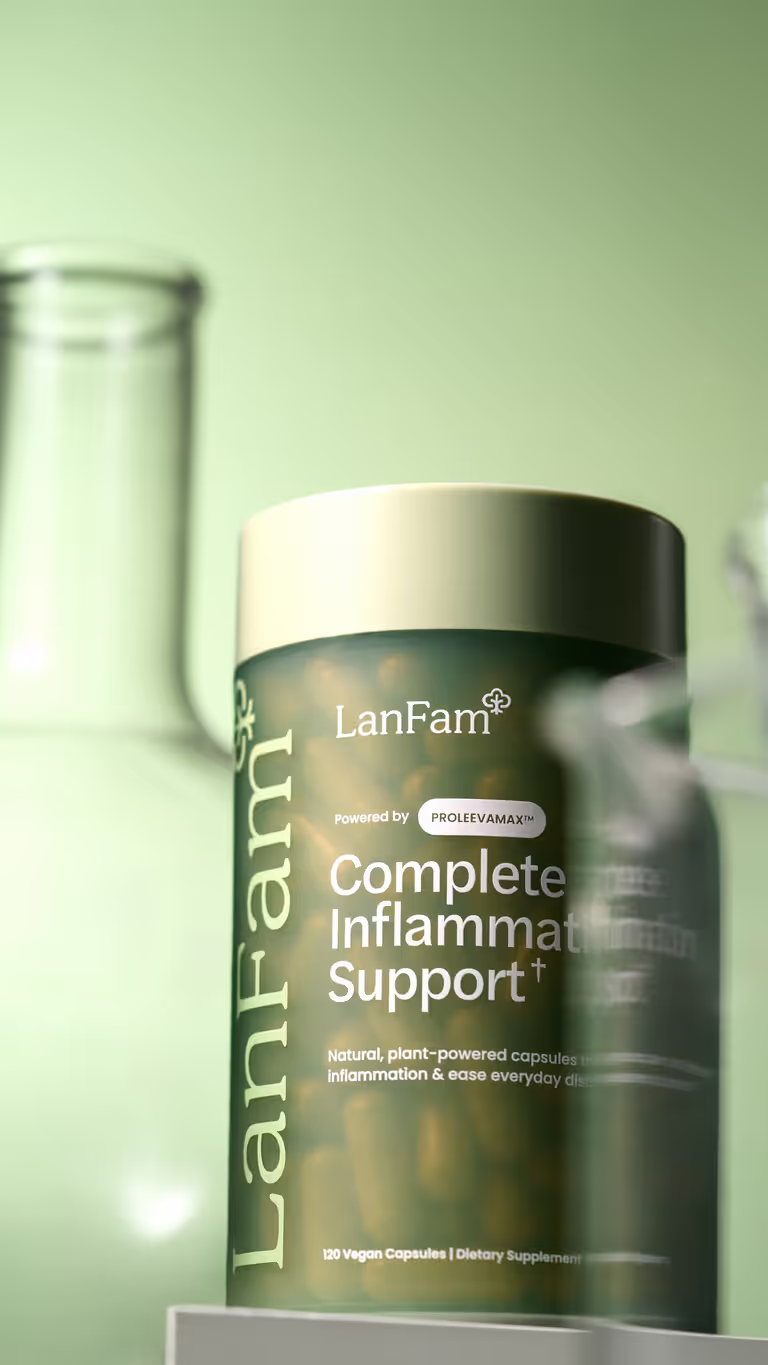
This is the scientific framework behind LanFam Health's Complete Inflammation Support formula - a 13-ingredient system built around six distinct pathways rather than a single mechanism. It is the product we recommend after the lifestyle fundamentals are in place.
Multi-Pathway Thinking: Why It Matters
Here is what many supplement approaches miss: addressing only COX-2 while 5-LOX continues to drive leukotriene production is like unplugging one of six hoses while five others keep running. Effective natural inflammation support requires working across multiple pathways simultaneously.
Safety note: Boswellia, curcumin, and resveratrol are generally well-tolerated at evidence-based doses, but they can interact with blood thinners and some medications. If you are on any prescription medication or have a diagnosed condition, review supplementation with your healthcare provider before starting.
The 90-Day Protocol Framework
The biology here matters for expectation-setting: inflammation reduction is not a 5-day event. Most clinical trials showing meaningful results run 8 to 12 weeks minimum. This is because the pathways involved are regulated at the gene expression level - real change requires consistent, sustained input.
A practical framework:
Weeks 1-2: Eliminate the major dietary drivers (refined sugar, seed oils, processed foods). Begin the sleep and movement habits.
Weeks 3-6: Dietary foundations are set. Layer in targeted botanical supplementation. Track how your body responds - mobility, morning comfort, sleep quality, and energy are practical proxies.
Weeks 7-12: The compounding effects become measurable. Clinical trials using the McGill Pain Questionnaire - a validated tool for tracking discomfort levels - have shown statistically significant improvements at 8 weeks with multi-pathway botanical protocols.
LanFam Health backs their Complete Inflammation Support with a 90-day money-back guarantee for exactly this reason: you need sufficient time for the protocol to work before you can evaluate it honestly.
Building a Natural Inflammation Protocol That Actually Works
Reducing inflammation naturally is not complicated - but it does require addressing the problem at multiple levels simultaneously rather than chasing a single solution.
The framework is consistent across the evidence:
1. Remove the primary dietary drivers (refined sugar, processed oils, alcohol) 2. Build the lifestyle foundations (7-9 hours of sleep, regular movement, stress regulation) 3. Add targeted botanical and nutritional supplementation that works across multiple inflammatory pathways, not just one
For those who want a structured, research-informed supplementation option to layer onto that foundation, LanFam Health's Complete Inflammation Support was formulated specifically around this multi-pathway approach - 13 standardized ingredients targeting six distinct mechanisms, backed by a 90-day guarantee.
You can review the full ingredient rationale and the clinical research behind each compound on the Ingredients page and the Science page.
The goal is not to replace medical care. It is to give your body the consistent, multi-system support it needs to maintain healthy inflammatory balance over time.
Related Reading
If you want to go deeper on the research behind this guide, these are the supporting articles in the LanFam library:
The Inflammatory Cascade Explained: A Step-by-Step Guide to How Chronic Inflammation Actually Works
Signs of Chronic Inflammation: Is Your Body Sending You a Signal?
Foods That Cause Inflammation: What the Science Actually Says
The Stress-Inflammation Feedback Loop: How Cortisol and Inflammation Drive Each Other
Best Anti-Inflammatory Supplement
What Is Neuroinflammation? (And Why Your Brain Fog Might Not Be "Just Stress")

Frequently asked questions
There's a seat at our table
Letters from our family to yours — the science, the recipes, the things that actually helped real families. Leave your email and we'll send the next one.