Natural Anti-Inflammatory for Back Pain: Why Most Treatments Miss the Root Cause
If you have been told your back pain is structural — a degenerating disc, a compressed nerve, or just "wear and tear" — that explanation is likely incomplete.
Ingredients in this letter
Most Back Pain Has an Inflammatory Root - and It Is Rarely Treated That Way
If you have been told your back pain is structural - a degenerating disc, a compressed nerve, or just "wear and tear" - that explanation is likely incomplete.
Research consistently shows that inflammation is not just a symptom of back pain. In many cases, it is the cause. The tissue breakdown you see on an MRI is often downstream of a sustained inflammatory process that has been running quietly for months or years. Treat only the structure while the inflammation continues unchecked, and the pain returns. This is why so many people cycle through physical therapy, injections, and brief periods of relief, only to find themselves back at square one.
For anyone trying to break that cycle, understanding the inflammatory biology of back pain - and which natural compounds actually address it - is a meaningful place to start.
If you wake up with a stiff, aching back most mornings, the inflammatory connection may be particularly relevant. See our deeper look at why your back is stiff in the morning for the tissue-level explanation.
Why Inflammation Drives Back Pain More Than Most People Realize
The Intervertebral Disc as an Inflammatory Organ
Intervertebral discs - the cushioning structures between your vertebrae - are relatively avascular, meaning they receive limited blood supply. This makes them slow to heal and highly susceptible to inflammatory cascades once triggered.
When a disc is stressed, damaged, or simply under chronic load, it releases pro-inflammatory cytokines including interleukin-1β (IL-1β), tumor necrosis factor-alpha (TNF-α), and prostaglandins. These signals do not stay local. They sensitize the nearby nerve roots that run along your spinal column, which is why disc inflammation produces radiating pain, burning sensations, and morning stiffness rather than a clean, isolated ache.
A 2016 review in the European Spine Journal summarized this clearly: inflammatory mediators secreted by degenerating disc tissue directly sensitize and chemotactically attract nociceptive fibers. The pain is not simply mechanical pressure on a nerve. It is an inflammatory chemical environment bathing the nerve.
Two Pathways That Standard NSAIDs Miss
The body's inflammatory response runs through multiple enzymatic pathways. The two most central to musculoskeletal pain are COX-2 (cyclooxygenase-2) and 5-LOX (5-lipoxygenase).
Standard over-the-counter NSAIDs - ibuprofen, naproxen - primarily inhibit COX-2. That is why they provide some relief. But COX-2 is only one channel. When you block it, the inflammatory substrate often shunts toward the 5-LOX pathway, producing leukotrienes that sustain inflammation through a different mechanism entirely. This is sometimes called the "arachidonic acid shunting" effect, and it partially explains why NSAID relief is often incomplete or short-lived for chronic back pain.
Addressing both pathways - and the additional signaling routes that amplify and sustain inflammation - requires a broader approach than any single compound or drug class can deliver.
The Natural Compounds With the Strongest Evidence for Back-Related Inflammation
Boswellia Serrata - The 5-LOX Inhibitor
Boswellia serrata resin extract is one of the most clinically studied natural anti-inflammatory compounds for musculoskeletal pain. Its active constituents, boswellic acids (particularly AKBA - acetyl-11-keto-β-boswellic acid), are potent inhibitors of 5-LOX.
This is significant precisely because 5-LOX is the pathway most NSAIDs do not touch. A randomized controlled trial published in Phytomedicine found that Boswellia serrata extract significantly reduced pain and improved function in patients with osteoarthritis of the knee, with benefits measurable at 7 days and more pronounced at 8 weeks. The mechanism - 5-LOX inhibition - is directly applicable to spinal inflammation driven by the same leukotriene cascade.
Critically, Boswellia does not carry the gastrointestinal risks of chronic NSAID use. For anyone who has experienced GI discomfort from long-term ibuprofen, this is a meaningful practical distinction.
Curcumin + Piperine - COX-2 Inhibition With Bioavailability
Curcumin, the active polyphenol in turmeric, inhibits NF-κB - the transcription factor that upregulates COX-2 production - as well as directly suppressing COX-2 itself. The research on curcumin for inflammatory conditions is extensive; a meta-analysis in the Journal of Medicinal Food (2016) found curcumin supplementation produced significant reductions in inflammatory markers including CRP and IL-6.
The well-documented limitation of curcumin is bioavailability. On its own, curcumin is poorly absorbed and rapidly metabolized. Piperine - the active alkaloid in black pepper - inhibits the glucuronidation enzymes that clear curcumin, increasing bioavailability by as much as 2,000% according to research published in Planta Medica.
This is why curcumin without piperine in the formulation is a meaningful gap. The compound does not perform in isolation the way it performs when paired.
Resveratrol - Cross-Pathway Modulation and Neuroinflammation
Resveratrol, found in the skin of red grapes and in Japanese knotweed, modulates inflammation through a different mechanism than boswellia or curcumin. It activates SIRT1, a deacetylase enzyme that suppresses NF-κB signaling and downregulates pro-inflammatory gene expression broadly.
Animal and in-vitro studies suggest resveratrol also addresses neuroinflammation - the inflammatory sensitization of nerve tissue - which is relevant when back pain has a radiating or neuropathic component. For pain that feels diffuse, burning, or that travels into the hips and legs, the neuroinflammatory dimension deserves attention.
L-Serine and Choline - Membrane Integrity and Neural Function
Less discussed in the popular literature on back pain, L-serine and choline support the phospholipid bilayers of neural membranes. Structurally intact neural membranes are less prone to inflammatory degradation and maintain more consistent signal thresholds. In the context of chronic pain, where central sensitization - the nervous system's tendency to amplify pain signals over time - is a recognized complicating factor, supporting neural membrane health is a relevant upstream intervention.
5-HTP, B6, and GABA - The Neurological Pain Modulation Layer
The connection between chronic pain and the nervous system's inhibitory tone is well-established. Low GABA activity is associated with reduced pain thresholds and heightened sensitivity. 5-HTP (5-hydroxytryptophan), a direct precursor to serotonin, supports descending pain modulation pathways - the neurological circuits that signal the spinal cord to dampen incoming pain signals. Vitamin B6 is an essential cofactor in this conversion process.
This is not a sedative effect. It is support for the body's own pain-regulation architecture.
Why a Single-Compound Approach Often Falls Short
The compounds above address inflammation through distinct and partially non-overlapping mechanisms: 5-LOX inhibition (Boswellia), COX-2 and NF-κB suppression (curcumin), SIRT1 activation (resveratrol), membrane integrity (L-serine, choline), and neurological pain modulation (5-HTP, B6, GABA).
Back pain driven by sustained inflammation rarely runs through a single pathway. The disc environment, the nerve root, the surrounding soft tissue, and the central nervous system's response to ongoing pain signals are all involved. A supplement addressing only one pathway - or a drug that addresses one pathway while shunting the process to another - may produce partial or temporary relief.
The clinical case for multi-pathway support is not theoretical. A formulation containing standardized doses of these compounds as a coordinated system showed a statistically significant 22-point reduction on the McGill Pain Questionnaire - one of the most validated pain assessment tools in clinical research - at 8 weeks in a published study (p=0.042). This kind of structured outcome data is rare in the botanical supplement space, where most products go to market without any clinical validation.
How to Evaluate Any Natural Anti-Inflammatory Supplement for Back Pain
Not all supplements marketed for inflammation are equivalent. Before choosing one, these are the questions worth asking:
Does it address both COX-2 and 5-LOX? If it contains only curcumin and turmeric without Boswellia, it is likely covering only one pathway.
Does it include piperine with curcumin? Without it, bioavailability is significantly reduced regardless of curcumin dose.
Are the botanical extracts standardized? Standardization means the active constituent is measured and guaranteed - not just the raw herb weight. "500mg turmeric root" is not the same as "500mg turmeric standardized to 95% curcuminoids."
Does it include support for the neurological component? Compounds addressing GABA tone, serotonin precursors, and neural membrane integrity are rarely found in single-ingredient products.
Is there any clinical outcome data? Most botanical supplements have no human clinical trial data. Formulations that do - particularly with validated pain assessment instruments and p-values - represent a meaningfully different category.
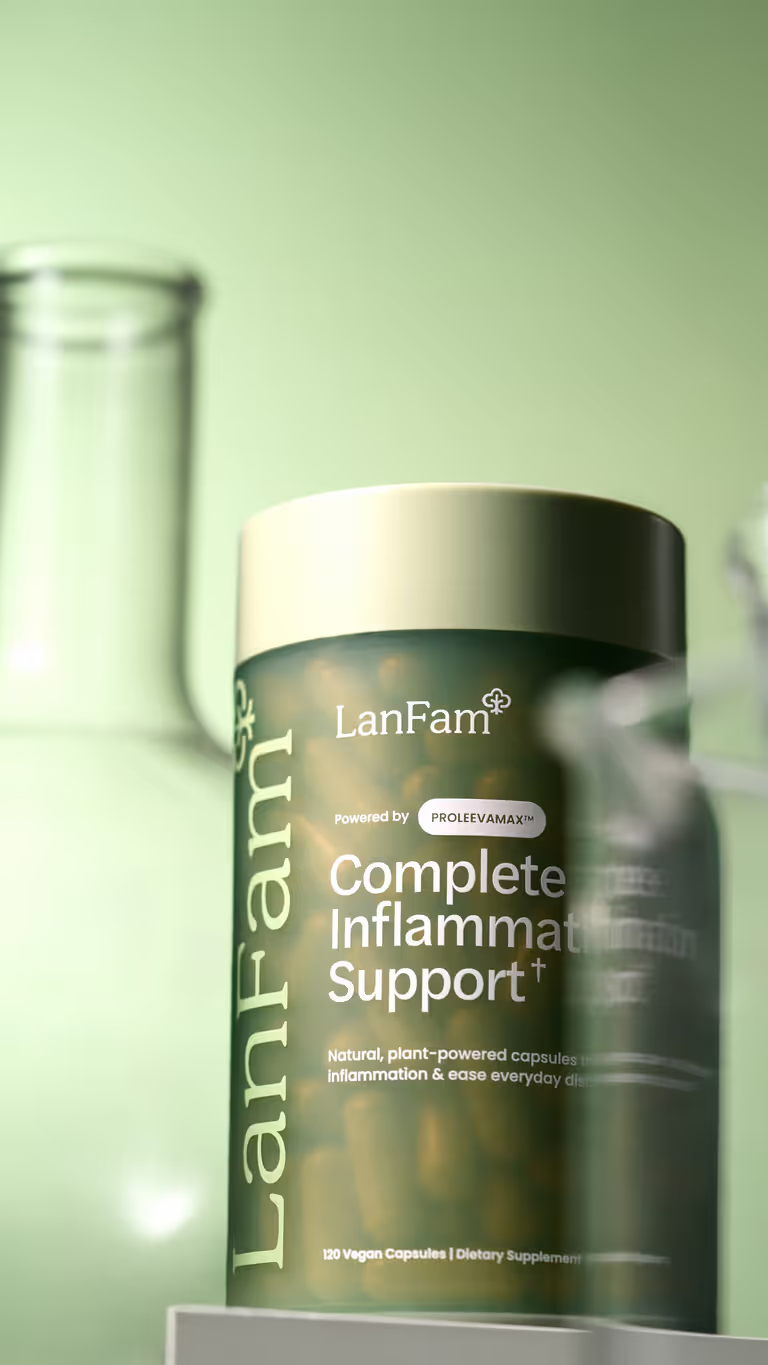
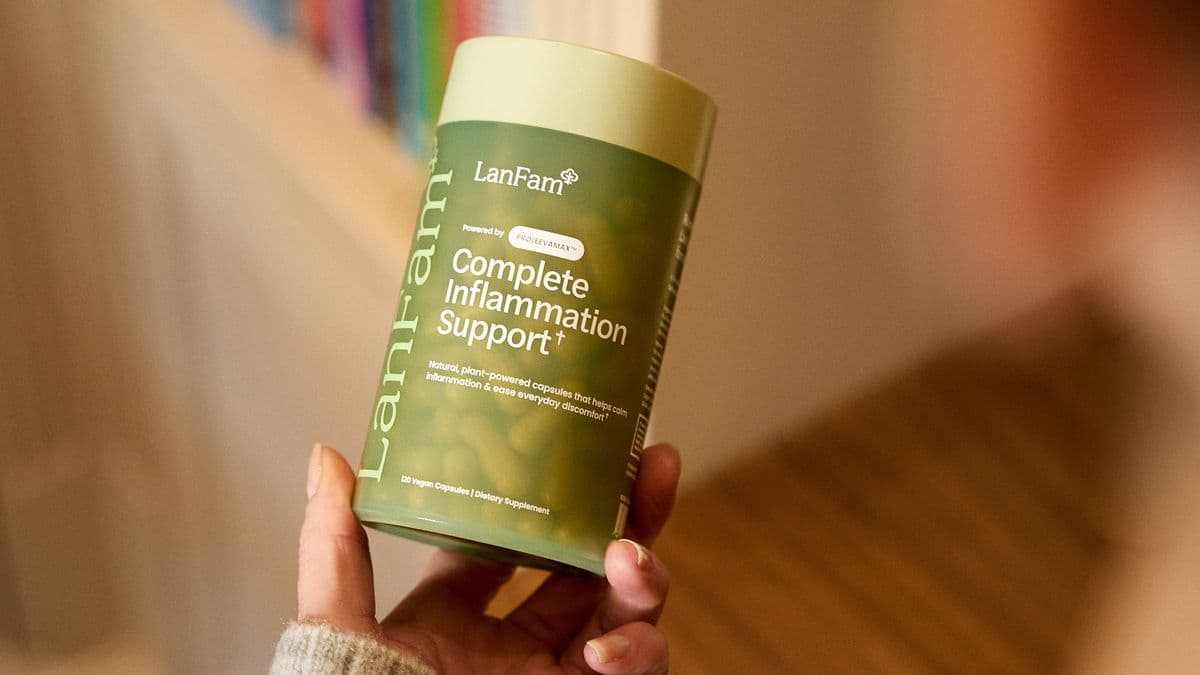
LanFam Health's Complete Inflammation Support (Powered by ProleevaMax) was formulated against these criteria specifically. Fabio Lanzieri, with 40 years in pharmaceutical development, and co-founder Maria Lanzieri built the protocol from the clinical literature up - not from a marketing brief. The 13-ingredient, multi-pathway formulation and its clinical outcome data are detailed on the ingredients page.
What to Expect When You Start
Botanicals work on different timelines than pharmaceuticals. Most people notice a shift in how their back feels over a period of weeks, not hours. The clinical data showing significant pain reduction at 8 weeks reflects this - results were meaningful, but they accumulated over time.
The practical implication: give a multi-pathway botanical protocol at least 6 to 8 weeks of consistent daily use before evaluating whether it is working. Episodic or inconsistent use will not produce the same outcome.
Starting With the Underlying Problem
Back pain that keeps coming back is almost always telling you something the treatment approach has missed. When the underlying inflammatory environment is never fully addressed - when only one pathway is blocked while others continue, or when nerve sensitization accumulates without support for the systems that regulate it - temporary relief becomes a repeating cycle.
The compounds with the strongest evidence for multi-pathway inflammation support are not new. Boswellia, curcumin, and resveratrol have decades of research behind them. What has been missing, in most over-the-counter options, is the formulation discipline to combine them at standardized doses with the supporting compounds that make them work as a system.
If you are ready to look at your back pain differently, Complete Inflammation Support was built for exactly this. The 90-day money-back guarantee means the risk of trying it is low. The potential of finally addressing the root cause rather than managing the symptom is worth the experiment.
These statements have not been evaluated by the Food and Drug Administration. This product is not intended to diagnose, treat, cure, or prevent any disease. This article is for informational purposes only and does not constitute medical advice. Consult a qualified healthcare provider before starting any supplement protocol, especially if you are taking prescription medications or managing a diagnosed condition.

Frequently asked questions
There's a seat at our table
Letters from our family to yours — the science, the recipes, the things that actually helped real families. Leave your email and we'll send the next one.