Supplements for Menopause Bloating: The Inflammation Link Most Articles Miss
The best supplements for menopause bloating, plus why estrogen decline drives gut inflammation — graded honestly, with the inflammation link most articles skip.

A woman named Diane wrote to me last spring. A runner her whole life, flat-stomached into her fifties — and then, somewhere in perimenopause, she started ending most days looking, in her words, "four months pregnant." Bloated by dinner, tight waistband by 3 p.m. She'd tried three off-the-shelf "menopause" supplements, a detox tea, and a fiber powder that made everything worse. Her question was simple and a little angry: what actually works, and why does nobody explain why this is even happening?
I spent 40 years in pharmaceuticals before my wife Maria's recovery pushed me to build a formula at our kitchen table. So I wanted to answer Diane the way I'd answer a friend across that table — with the mechanism, not just a list. Because here's what most articles on supplements for menopause bloating get wrong: they hand you seven products without explaining what changed inside you. And if you don't know what changed, you can't tell which supplement is solving your problem and which is just expensive.
This is that answer. The biology first, then the seven supplements — graded honestly, including where the evidence is thin.
Why Am I Suddenly So Bloated During Menopause?
This is the question I get most, almost word for word: why am I suddenly so bloated during menopause? The "suddenly" is worth sitting with — because it usually isn't sudden at all. It's three slow shifts that cross a threshold around the same time, and then one day the waistband tells on all of them.
Estrogen is the thread through every one. Most people file it under "reproductive hormone" and stop there — but estrogen is also one of the body's quiet regulators of the immune system, tilting your inflammatory tone toward "calm." When estrogen falls, that calming signal weakens, and inflammatory markers like IL-6, TNF-alpha, and CRP drift upward across the menopause transition [1][2]. The biology is genuinely two-sided and dose-dependent — estrogen can be pro- or anti-inflammatory depending on tissue and concentration — but the through-line at midlife is a shift toward a more inflammatory baseline [3][4]. Some researchers now describe the peri-menopause itself as a "systemic inflammatory phase" [5]. Hold onto that, because it's the link the bloating articles miss.
Here's how that backbone plays out in your gut, in three acts.
1. Gut motility slows down. Estrogen helps regulate the smooth muscle that moves food through your digestive tract. As estrogen declines, transit time tends to lengthen — food and gas sit longer. Slower transit means more fermentation time, and more fermentation means more gas. More gas means distension. This is the mechanism behind that classic complaint of feeling fine in the morning and inflated by evening — the day's food has had more hours to ferment than it used to.
2. The gut microbiome shifts. A specific cluster of gut bacteria — the estrobolome — helps recycle estrogen through the gut. As estrogen drops, microbiome composition changes, most consistently toward lower diversity and a relative rise in gas-producing species. A less diverse, more gas-forward microbiome is, almost by definition, a more bloating-prone one. I'll be straight: the menopause-specific microbiome literature is still young and mostly observational — strong on association, thin on "do X and your bloating resolves." I grade the probiotic evidence accordingly below.
3. Gut-barrier integrity declines. This is the one that ties back to inflammation. The cells lining your intestine sit shoulder to shoulder, sealed by tight junctions — that seal keeps what's in your gut from leaking into circulation. Those cells are metabolically hungry, and their single most important fuel is the amino acid L-glutamine [6][7]. When estrogen's calming influence fades and inflammatory tone rises, the barrier can become more permeable; bacterial fragments slip into circulation, which raises inflammation further, which slows motility and disturbs the microbiome. A self-reinforcing loop — motility, microbiome, barrier, each feeding the next, with inflammation underneath.
So when people ask does estrogen cause bloating — the honest answer is that estrogen decline drives the conditions that cause it. Not by one mechanism, but by three at once, with an inflammatory current running beneath them. That's also why a single magic pill rarely fixes it. You're not treating "gas." You're nudging a system back toward balance. If you want the full picture of how falling estrogen flips the body's inflammatory baseline beyond the gut, I wrote it up in menopause inflammation symptoms, and the deeper gut-barrier story lives in gut inflammation supplements.
First, a Distinction That Saves You Money: Bloating vs. Belly Fat
Before the list, one fork in the road — because half the people who search for menopause bloating actually mean something else.
Bloating is distension. It's gas and fluid and slowed transit. It comes and goes — flatter in the morning, fuller by night — and it's soft and tight, not something you can grab. It responds to the digestive levers below.
Belly fat is tissue. Specifically visceral adiposity, the metabolically active fat that increases with the menopause transition as fat redistributes toward the midsection. You can pinch it; it doesn't deflate overnight. It's a body-composition issue, not a digestive one, and it answers to different levers — strength training, protein, sleep, and the inflammation that accompanies visceral fat gain.
They get conflated constantly, and the supplements aisle is happy to let you conflate them. If your "bloating" is there in the morning, doesn't shift with meals, and feels like firm tissue rather than air — you're probably looking for supplements for menopause belly fat, and the rest of this article is the wrong map. If it's the come-and-go kind that tracks with what and when you eat — keep reading.
What Doesn't Work (and Why It Keeps Getting Recommended)
A short list of things that get recommended anyway, and why I'd skip or be careful with them:
- A big spoonful of psyllium added overnight. For a gut with slow motility and a disrupted microbiome, a sudden concentrated fiber dose often makes bloating worse for a week or two before it helps. Fiber is good long-term — the "just eat more fiber!" delivery is the problem.
- "Detox" teas with senna or other stimulant laxatives. These force transit without touching motility, microbiome, or inflammation. Relief for a couple of days, rebound after, and dependence over time.
- Single-strain probiotics labeled vaguely "for women." The probiotic evidence that exists is strain-specific. A generic "lactobacillus blend" may not contain any strain that was actually studied.
- Simethicone gas-reducers. Fine occasionally for trapped-gas bubbles — but they do nothing for the underlying drivers. A tool, not a plan.
The seven below aim at root mechanisms instead. That's the whole difference.
The 7 Best Supplements for Menopause Bloating
A note on grades: I'm grading the human evidence as it stands, not the marketing. An honest "B" or "limited data" from me is worth more than an inflated "A" from someone selling you the bottle.
1. Multi-Strain Probiotics (Strain-Specific)
Evidence grade: B− for general functional bloating; limited menopause-specific data | Typical use: 10–50 billion CFU, multiple named strains, daily
On probiotics for menopause bloating, here's the honest state of it. The evidence that holds up is strain-level, not "probiotic" as a category — and the strains with the most functional-GI data are the ones people quote most: Lactobacillus rhamnosus GG, Bifidobacterium lactis (BB-12 or HN019), Lactobacillus acidophilus NCFM, Bifidobacterium longum BB536, and Saccharomyces boulardii (mainly for antibiotic-associated upset).
I won't overstate it. Multi-strain formulas tend to outperform single-strain ones for functional GI symptoms in the broader literature, and probiotics make biological sense for the microbiome-shift driver. But menopause-specific trials are few and small — this is a reasonable, low-risk foundation, not a proven cure. There's no large randomized trial I can point you to that says "this strain resolves menopause bloating," so I'm not going to invent one.
What to demand on the label: strain-level names (not just "lactobacillus"), CFU guaranteed at expiration, and refrigeration if the label calls for it. For the deeper why behind feeding a diverse microbiome, the science behind your gut walks through it.
2. Digestive Enzymes (For Meal-Triggered Bloating)
Evidence grade: C+ / limited human data for general bloating | Typical use: a full-spectrum blend at the start of meals
If bloating reliably hits within an hour of eating, incomplete digestion may be part of the story. Pancreatic enzyme output — lipase for fat, protease for protein, amylase for carbohydrate — can decline with age, and menopause's slower transit compounds it. An enzyme blend at the start of a meal supports fuller digestion before food reaches the colon, where the fermentation (and gas) happens.
Candidly: outside of diagnosed pancreatic insufficiency, the human data for routine enzyme use in everyday bloating is limited and the trials are small. The mechanism is sound and safety is good — so it earns a spot — but it's a "try it and judge by your own response" supplement, not one with a citation I can hang my hat on.
What to look for: vegetarian/fungal-source enzymes (wider pH range than animal-derived), plus lactase if dairy is a trigger.
3. Magnesium (Glycinate or Citrate)
Evidence grade: B (mechanistic, with broad clinical use) | Typical use: 200–400 mg elemental, evening
Magnesium earns its place for two reasons. It supports smooth-muscle relaxation in the intestinal wall — directly relevant to the slowed-motility driver — and magnesium citrate has a gentle osmotic pull that supports regular transit without the rebound of stimulant laxatives.
Form matters. Glycinate is the gentlest — well absorbed, non-laxative, good if you don't need a motility push. Citrate has more of a transit effect, useful for constipation-dominant bloating. Oxide is poorly absorbed; skip it. The bonus, and it's a real one, is that magnesium tends to do several jobs in a menopause routine at once — it's also relevant to sleep and to the joint and muscle discomfort so many women describe at midlife (more on that in supplements for menopause joint pain).
4. Ginger Root (Zingiber officinale)
Evidence grade: B for nausea/motility; limited bloating-specific data | Typical use: 500–1,000 mg standardized extract, or 1–2 g fresh, before trigger meals
Ginger works on two fronts: it's a mild prokinetic (it helps move things along) and a mild support for a healthy inflammatory response.* For a gut with slowed transit, the motility angle is the relevant one. The strongest human ginger data is for nausea and gastric emptying rather than bloating per se — so I'd frame it as a sensible, well-tolerated motility helper, not a heavily-trialed bloating remedy.
It's one of the easiest things to add — fresh ginger tea, a capsule, or a chewable lozenge before a meal you know tends to inflate you. Note that ginger is not in the ProleevaMax formula; it's a complementary option if motility is specifically your bottleneck.
5. Peppermint Oil (Enteric-Coated)
Evidence grade: A for IBS-pattern bloating | Typical use: 180–225 mg enteric-coated capsules, 2–3× daily
This is the one with the strongest clinical footing on the whole list. Enteric-coated peppermint oil has solid randomized-trial evidence for functional bloating and IBS-pattern symptoms — cramping, distension, gas. It relaxes intestinal smooth muscle, which is exactly the lever you want when distension and spasm travel together.
Two non-negotiables. First, enteric coating matters — uncoated peppermint oil breaks down in the stomach and can cause reflux instead of relief; the coating gets the oil to the intestine where it works. Second, don't use it if you have GERD or significant reflux — even coated, it can aggravate those in some people. If your bloating is the crampy, distended, gassy IBS type, this is where I'd point you first.
6. L-Glutamine (Gut-Barrier Support)
Evidence grade: B (mechanistic + barrier-marker trials) | Typical use: 5–10 g daily
Remember the third act — the leaky barrier? L-glutamine is aimed squarely at it. It's the primary fuel for the enterocytes that line your gut and form that barrier; give those cells their preferred substrate and you support their ability to maintain and repair the tight-junction seal [6][7]. Glutamine also has a documented role in intestinal immune function, which matters when barrier and inflammatory tone are linked [8].
I'll grade it straight: the barrier-marker and mechanistic evidence is genuinely good, but menopause-specific glutamine trials don't exist yet — the case here is biological consistency, not a menopause RCT. That's an honest B, and it's why glutamine shows up as a component of a broader approach, not a standalone cure. For the full mechanism, I wrote a dedicated piece: l-glutamine, the gut-lining amino acid. It's also one of the ingredients in ProleevaMax for exactly this reason — to support the gut-barrier piece of the inflammation cascade.*
7. Multi-Ingredient Anti-Inflammatory Formulas (The Inflammation Piece)
Evidence grade: variable — strong for individual botanicals, formula-dependent overall | Typical approach: standardized botanicals + barrier amino acids + cofactors
Here's the link the other articles miss entirely: in menopause, bloating is partly an inflammation problem. When estrogen's calming signal fades and inflammatory tone rises, it touches motility, microbiome, and barrier all at once. Address only the downstream symptoms and you're forever bailing water; support a healthy inflammatory response and you're closer to the leak itself.*
This is the rationale for a multi-ingredient formula built around inflammation rather than around "digestion" as a narrow category. The single-ingredient evidence for the anti-inflammatory botanicals is where this gets genuinely strong:
- Boswellia serrata has meta-analytic support for reducing osteoarthritis discomfort, and mechanistic work showing it modulates the 5-LOX inflammatory pathway and immune signaling [9][10][11]. (Deeper dive: boswellia serrata benefits.)
- Curcumin with piperine — curcumin acts on the NF-κB inflammatory pathway and has meta-analytic support for joint discomfort; on its own it's poorly absorbed, so black-pepper piperine, which raised curcumin bioavailability dramatically in human pharmacokinetic work, is paired with it [12][13][14].
- L-glutamine for the gut-barrier component, as above [6][7].
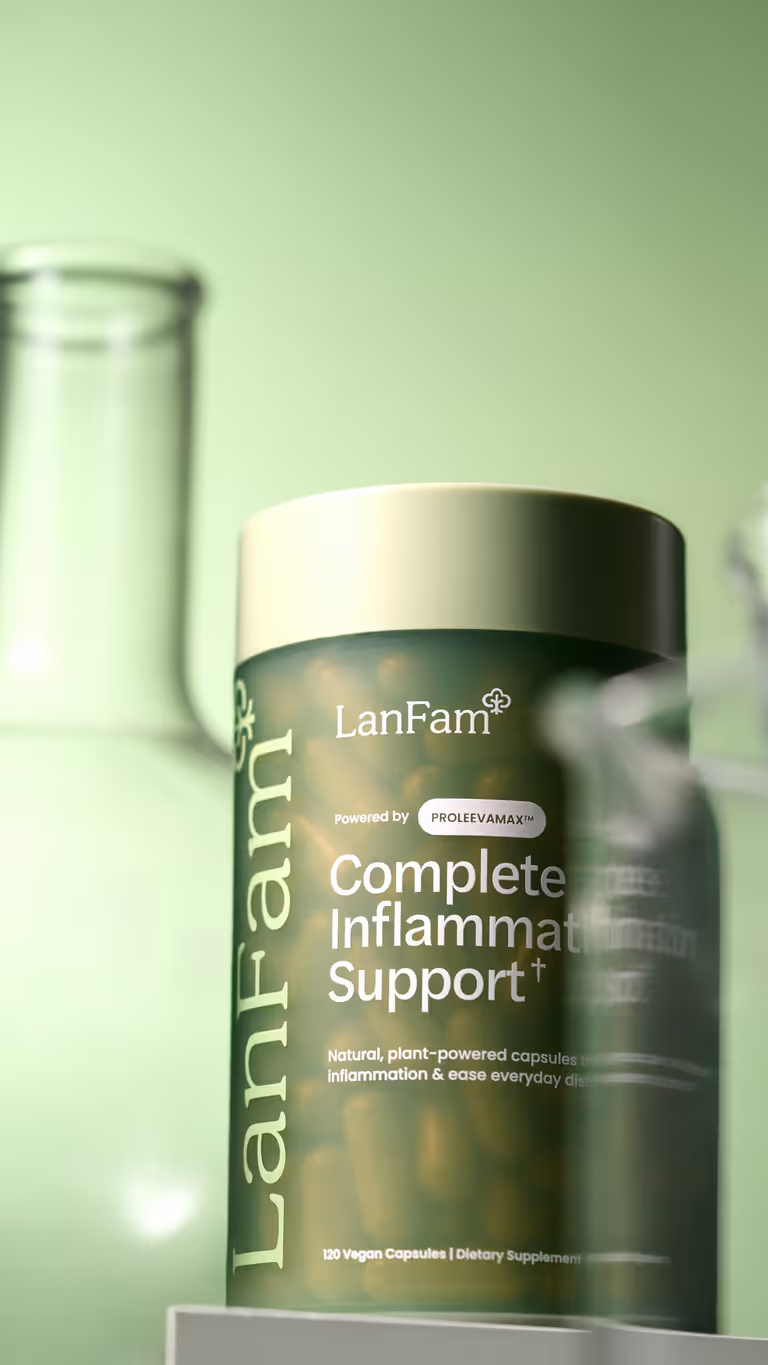
That's the thinking behind ProleevaMax: 13 standardized ingredients including Boswellia (standardized to 65% boswellic acid), Turmeric Root Extract paired with Black Pepper for absorption, L-Glutamine for barrier support, and GABA for the nervous-system component of bloating many women feel as stress-triggered flare-ups. Plainspoken about what it is and isn't: not every multi-ingredient formula helps with bloating, and this one is built around the inflammatory driver — so I present it honestly next to the single-ingredient options above, not as the only answer. If inflammation is the system tying your three drivers together, a formula aimed there often helps where a probiotic alone hasn't.*
The Order to Try Supplements (a Practical Sequence)
Most women don't need all seven at once. A sequence that works in practice:
Weeks 1–4 — Foundation.
- Multi-strain probiotic, daily
- Magnesium glycinate at bedtime (200–400 mg)
- Digestive enzymes if bloating is consistently meal-triggered
Weeks 4–8 — If the foundation isn't enough, add one layer.
- A multi-ingredient anti-inflammatory formula (like ProleevaMax), or
- Enteric-coated peppermint oil if the pattern is IBS-type (cramp, distension, gas)
Weeks 8–12 — Optional fine-tuning.
- L-glutamine if barrier-type symptoms persist
- Ginger if motility specifically is the bottleneck
It's a 90-day frame on purpose: that's roughly how long meaningful change in the microbiome and gut barrier takes. Switching protocols every two weeks tends to give you no result from any of them — the most common reason people decide "nothing works" is that nothing got a fair run.
What Foods Should I Avoid for Menopause Bloating?
Supplements are half the lever; the plate is the other half. What foods should I avoid for menopause bloating is genuinely individual, but the culprits cluster: carbonated drinks; sugar alcohols (sorbitol, xylitol, the "-ol" sweeteners in gum and "diet" products); large amounts of cruciferous vegetables if your microbiome isn't adapted to them; high-fructose fruit eaten alone on an empty stomach; and dairy if your lactase has dropped. Rather than cutting broadly and living on toast, a short, structured low-FODMAP trial (2–3 weeks, then systematic reintroduction) finds your triggers more cleanly. And add fiber gradually — soluble first (oats, chia, berries, cooked vegetables), roughly 5 g more per week, with water — because a sudden fiber jump is one of the fastest ways to make bloating worse before it gets better. A steady morning pattern helps too; I laid one out in the anti-inflammatory breakfast guide.
When Bloating Is NOT Normal
Everything above is for functional bloating — the come-and-go kind that tracks with meals, stress, and hormones. Supplements do not address structural or disease-based bloating. Please see a doctor, not a supplement, if you have any of these:
- Bloating with unintentional weight loss
- Bloating with blood in the stool, or black, tarry stools
- Persistent bloating for weeks with no meal-pattern correlation
- Bloating with severe, sudden-onset pain
- Bloating with difficulty swallowing
- Changes in stool caliber (pencil-thin stools)
- A strong family history of ovarian, colon, or pancreatic cancer alongside new persistent bloating
These can signal conditions that need evaluation. No formula on earth substitutes for that visit.
Starting a 90-Day Menopause Bloating Protocol
If I were writing back to Diane today, I'd tell her what I'll tell you. Start with the foundation — probiotic plus magnesium, enzymes if your bloating is meal-triggered — and give it a full four weeks before you judge it. If it's not enough, add one layer to your pattern: the multi-ingredient anti-inflammatory route if inflammation is clearly the thread, or enteric-coated peppermint if it's the crampy IBS type. Pair all of it with gradual food changes, not a crash elimination.
For the inflammation piece, ProleevaMax carries a 90-day money-back guarantee, because the 90-day commitment is the one that matches the biology — not a marketing number. We made it at our kitchen table for one person we love before we made it for anyone else. That's still the standard: if we wouldn't give it to our own, we won't make it.
Whatever you choose, give it the full season it needs. The gut rebuilds slowly, but it does rebuild.

References
- 2.Taneja V. Sex Hormones Determine Immune Response. Frontiers in Immunology. 2018. https://doi.org/10.3389/fimmu.2018.01931
- 3.El Khoudary SR, Greendale G, Crawford SL, et al. The menopause transition and women's health at midlife: a progress report from the Study of Women's Health Across the Nation (SWAN). Menopause. 2019. https://doi.org/10.1097/gme.0000000000001424
- 4.Straub RH. The complex role of estrogens in inflammation. Endocrine Reviews. 2007. https://doi.org/10.1210/er.2007-0001
- 5.Gubbels Bupp MR, Potluri T, Fink AL, Klein SL. The Confluence of Sex Hormones and Aging on Immunity. Frontiers in Immunology. 2018. https://doi.org/10.3389/fimmu.2018.01269
- 6.McCarthy M, Raval AP. The peri-menopause in a woman's life: a systemic inflammatory phase that enables later neurodegenerative disease. Journal of Neuroinflammation. 2020. https://doi.org/10.1186/s12974-020-01998-9
- 7.Kim MH, Kim H. The Roles of Glutamine in the Intestine and Its Implication in Intestinal Diseases. International Journal of Molecular Sciences. 2017. https://doi.org/10.3390/ijms18051051
- 8.Cruzat V, Macedo Rogero M, Noel Keane K, Curi R, Newsholme P. Glutamine: Metabolism and Immune Function, Supplementation and Clinical Translation. Nutrients. 2018. https://doi.org/10.3390/nu10111564
- 9.Shah AM, Wang Z, Ma J. Glutamine Metabolism and Its Role in Immunity, a Comprehensive Review. Animals. 2020. https://doi.org/10.3390/ani10020326
- 10.Yu G, Xiang W, Zhang T, et al. Effectiveness of Boswellia and Boswellia extract for osteoarthritis patients: a systematic review and meta-analysis. BMC Complementary Medicine and Therapies. 2020. https://doi.org/10.1186/s12906-020-02985-6
- 11.Kimmatkar N, Thawani V, Hingorani L, Khiyani R. Efficacy and tolerability of Boswellia serrata extract in treatment of osteoarthritis of knee — a randomized double blind placebo controlled trial. Phytomedicine. 2003. https://doi.org/10.1078/094471103321648593
- 12.Ammon HPT. Modulation of the immune system by Boswellia serrata extracts and boswellic acids. Phytomedicine. 2010. https://doi.org/10.1016/j.phymed.2010.03.003
- 13.Daily JW, Yang M, Park S. Efficacy of Turmeric Extracts and Curcumin for Alleviating the Symptoms of Joint Arthritis: A Systematic Review and Meta-Analysis of Randomized Clinical Trials. Journal of Medicinal Food. 2016. https://doi.org/10.1089/jmf.2016.3705
- 14.Feng J, Li Z, Tian L, et al. Efficacy and safety of curcuminoids for knee osteoarthritis: a meta-analysis of randomized controlled trials. BMC Complementary Medicine and Therapies. 2022. https://doi.org/10.1186/s12906-022-03740-9
- 15.Shoba G, Joy D, Joseph T, Majeed M, Rajendran R, Srinivas PS. Influence of piperine on the pharmacokinetics of curcumin in animals and human volunteers. Planta Medica. 1998. https://doi.org/10.1055/s-2006-957450
Frequently asked questions
There's a seat at our table
Letters from our family to yours — the science, the recipes, the things that actually helped real families. Leave your email and we'll send the next one.